

Sharks and Money
Joel Nancarrow has turned his hobby of shark fishing in Newcastle into a thriving and hugely popular business. Authoritarian shark huggers hate him for it, he tells me in this rare interview.

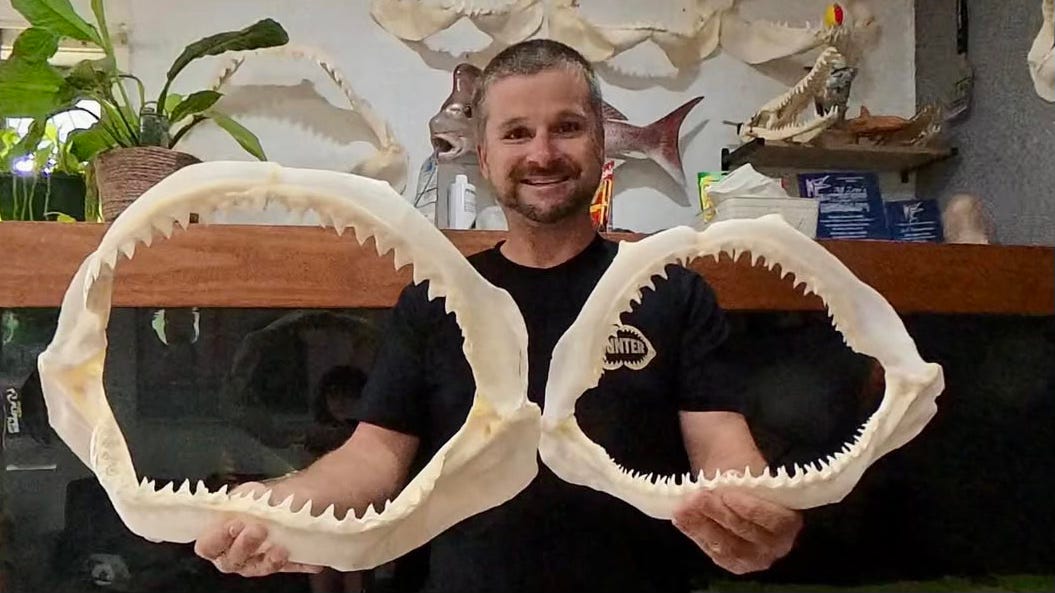
Under normal circumstances, professional shark fishermen can earn a decent living by selling fillets to fish-and-chip shops, fins to Chinese restaurants and jaws to restorers whose clients pay good money for a novel artefact to hang on the wall of the pool room.
But these are not normal circumstances.
It’s now been more than a quarter of a century since the federal government introduced protection for great whites in all Australia waters. Since then, politicians and researchers have tapped into a curious aspect of modern Australia: the tendency for many people, most of whom are not regular beach-goers, to see all dangerous sharks as venerable guardians of the marine environment that need to be nurtured, and blithely dismiss the correspondingly increasing attacks on people as a minor cost for saving the environment.
The trail of money that once led to hard-working fishermen who kept our beaches safe, our fish shops stocked with affordable flake and our coastal towns prosperous has since been diverted.
If anyone is making money from sharks now, it’s scientists and “experts”. Their conflict of interest is astonishing. They control the research that decides whether sharks are endangered, and know the lucrative, cushy grants will dry up if that research ever reaches the obvious conclusion that the size and abundance of sharks off Australian beaches are healthier than they have ever been.
One man has managed to reverse this trend, and is making money from sharks in a way that is both humiliating and infuriating the boffins in the shark protection racket.
Joel Nancarrow is the man behind the Hunter Shark Jaw Restoration Facebook page, featuring images and videos of him doing what he loves most – catching bull sharks in the lakes, rivers and ocean around Newcastle, NSW – which was until recently generating a large following and a small amount of revenue for him. But his numbers have doubled to more than 200k since January, earning him decent revenue as a result, thanks to one of the most catastrophic summers in Sydney in decades.
On the night of January 16, Nancarrow caught a 3.3m bull shark in a river near Newcastle. He posted about it the next morning, warning that there would soon be a mass migration of sharks like this one south towards Sydney.
Normally, bull sharks begin their migration south from rivers in the north of NSW after rain. Each rainfall flushes a proportion of them out, and they migrate in waves. Last summer, however, was especially dry, and the massive downpour in mid January meant most of the sharks, like the one he’d just caught, would migrate all at once. Smaller bull sharks would be competing with bigger ones, making surfers and swimmers increasingly likely prey.
“This is not the week to be swimming anywhere near river mouths or dirty water in the surf,” he said.
It wasn’t the first time one of his warnings turned out to be prophetic.
The following day, Nico Antic, 13, was attacked by a bull shark after diving from a popular jump rock in Sydney Harbour and later died of his wounds in hospital. It was the first of four attacks in NSW (three of them in Sydney) in less than 48 hours.
Nancarrow had never fished in Sydney before, but decided to drive down to prove that the attack on Antic wasn’t bad luck, it was inevitable.
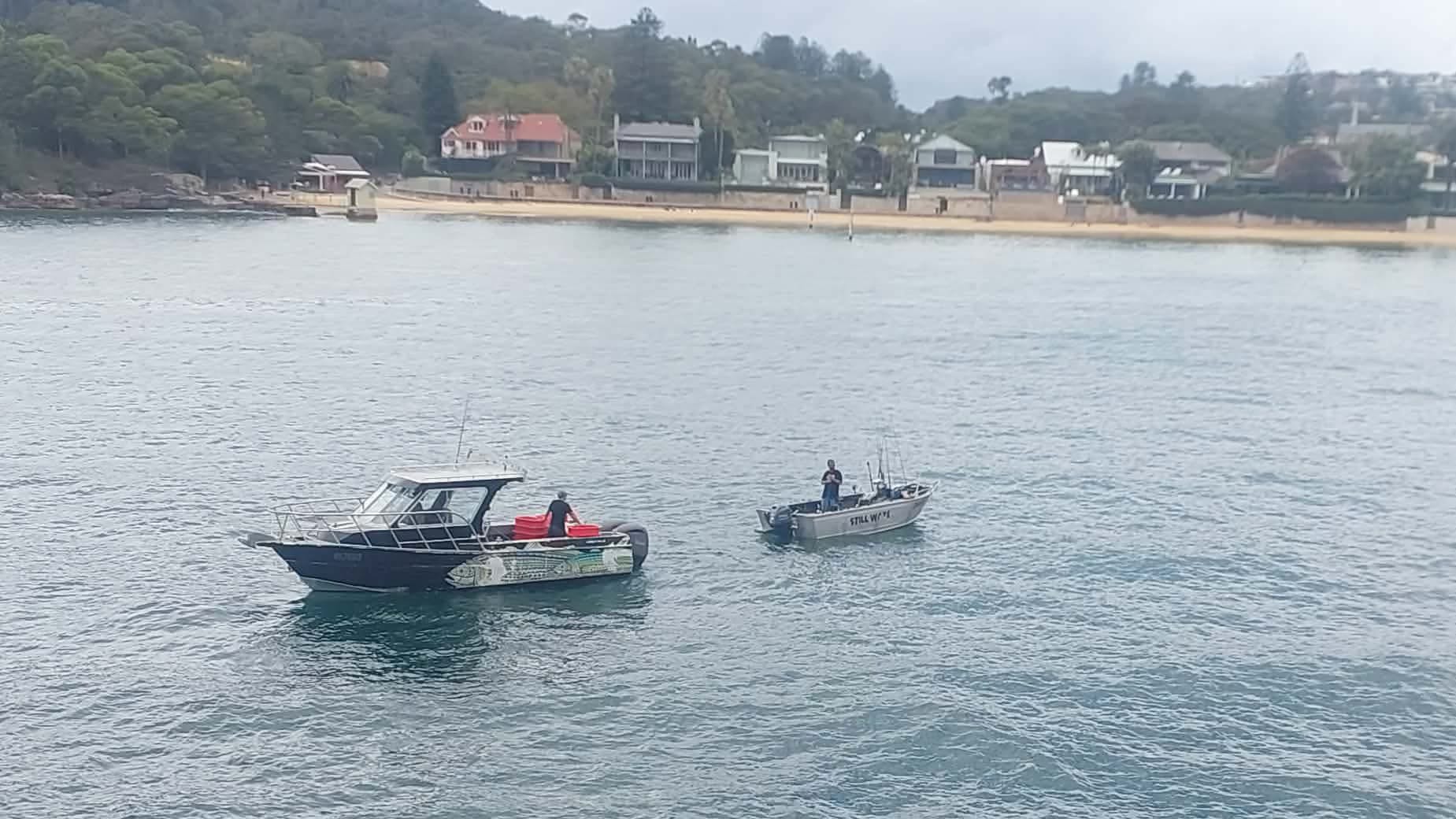
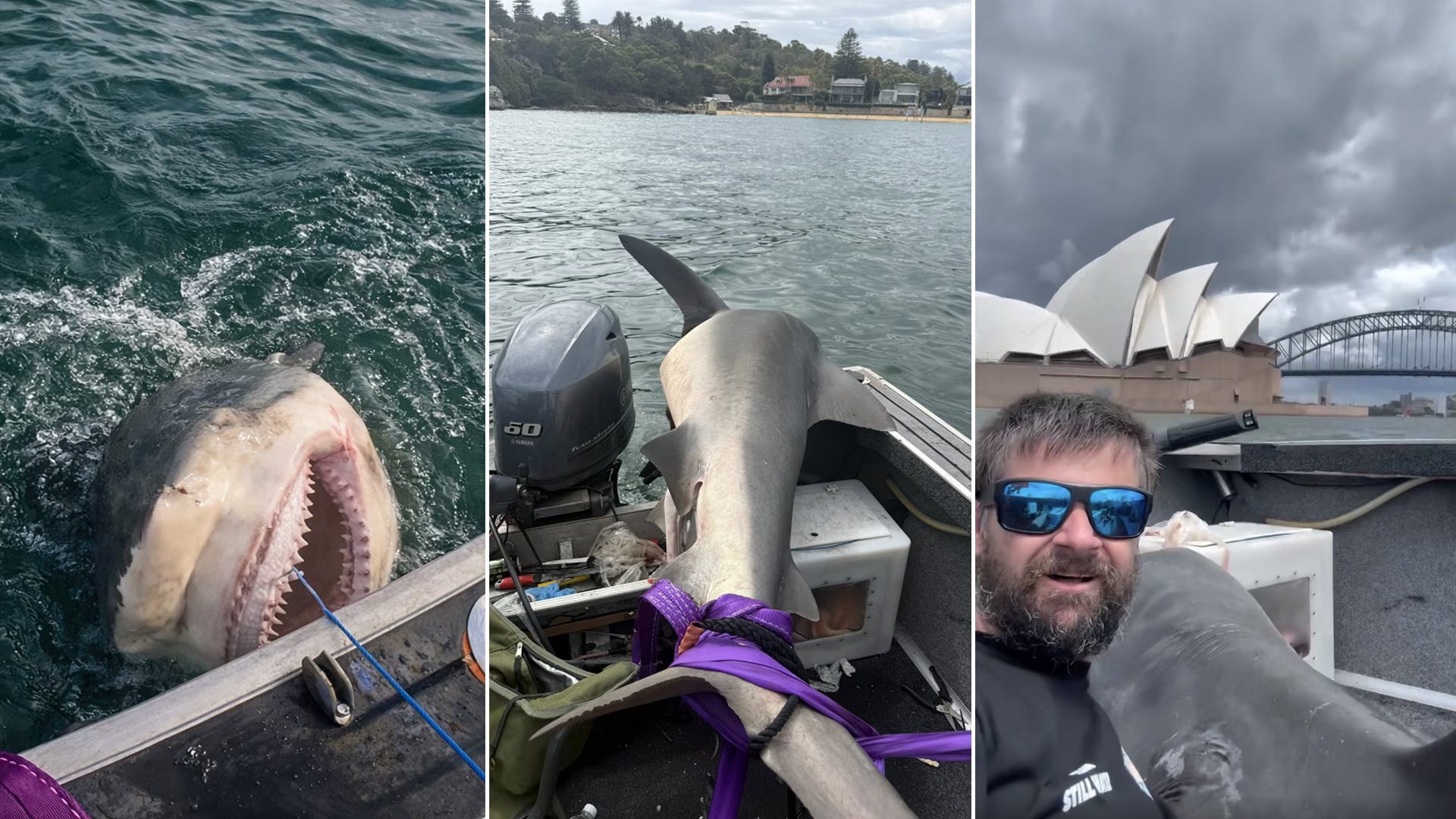
Three days after the attack on Antic, he took his dinghy out less than 200m off Camp Cove, an idyllic and popular swimming spot at the eastern end of the harbour, and, using only bait (not berley), had a 200kg male bull hooked and lying dead in his dinghy within two hours. A larger female saw what Nancarrow’s gaff did to her companion, and scurried. A bunch of kids swimming at Camp Cove saw what was happening and quickly swam ashore.
He took the shark for a victory lap around the harbour, snapping photos of it in front of the Opera House. Sharks were understandably the topic of the day in Sydney and NSW. Nancarrow’s Facebook account went crazy, as did inquiries from mainstream journalists, for whom he quickly developed an intense disdain. News organisations lifted images from his page with legal impunity and distorted things he said online when he declined requests for interviews.
I’m happy to report he’s granted me an interview, mostly because of our shared contempt for the “experts” in the NSW Department of Primary Industries and other government agencies, as well as our astonishment at the cavalier way those “experts” have allowed our beaches to become potentially deadly places to visit.
He has the sort of crude humour and commonsense attitude that once made Australia a capable, prosperous and happy country. He finds the zeitgeist, in which sharks are revered, ridiculous. “We are deliberately lowering ourselves on the food chain to suit the needs of whining people,” he says. “It’s pathetic.”
Our two long phone conversations ranged from the DPI’s seemingly infinite capacity for stupidity and the suicidal empathy people feel for sharks to the joy and satisfaction he gets from catching bull sharks. He catches on average 10-12 a month, but says that doesn’t make the water safer. He sees many more times that every time he goes fishing. “These things have 20 pups at a time,” he says. “I’m barely making a difference.”
He also divulged some aspects of himself that are not apparent from his online posts. He receives death threats from shark lovers almost daily, and he was once tipped off by an insider that the DPI was preparing to come after him. His response to both was to laugh them off. His indirect reply to the DPI was, “Come and get me. I’ve got nothing to hide.”
Unsurprisingly, there is a deeply charitable side to him. He frequently restores jaws himself and gives them to autistic kids, who for some reason often have a fixation with sharks. He says the response from the kids is sheer delight, which in turn brings tears from the mums.
“I don’t post about that, I just do it because it’s the right thing to do,” he says. He had ADD as a kid himself, which he said put him at the mild end of the spectrum, and remembers being obsessed with sharks from early childhood. “Since I was a kid all I wanted to do was own a shark tooth. I wouldn’t go on holidays unless I could see a shark.”
It was his grandmother who encouraged him to make fishing his hobby as a child. When she became terminally ill a few years ago, the last thing she said to him was to chase his passion. “You don’t just like fishing,” she said. “It’s who you are.”
He lost his job in construction soon afterwards. At the same time, his wife Kristy came into an unexpected inheritance from a long-lost relative and the decision to follow his grandmother’s advice became a no-brainer.
It’s not an easy or even cheap path. He kits out his boat and his fishing lines with a range of good-quality camera gear, which can easily go missing or get ruined in the conditions.
But it’s working. People love him, thanks largely to his authenticity. He doesn’t mince his words online, and some posts even come with language warnings. He is often approached by outdoor clothing companies to wear their gear in his videos in return for lucrative payments, but turns them down because he knows his followers would see through it. He is frequently asked where he plans to go fishing but can’t say because he knows he’d be mobbed and not get much fishing done.
Nancarrow’s celebrity appeal vaguely resembles that of 1990s TV fishing star Rex Hunt mixed in with a healthy dose of pioneer shark hunter Vic Hislop, who Nancarrow says was “the best there has ever been” and, in the age before social media, didn’t get the attention he deserved.
As much as the narks at the DPI would love to put Nancarrow out of business, they can’t because he stays carefully within the rules. The restored jaws that he sells are not from sharks he caught himself; rather, they are from commercial fishermen up the coast who have the appropriate licence. If he ever scrubs up the jaw of one of his own bull sharks, he gives it away, thereby remaining outside the definition of commercial fisherman. Kristy turns some of the flesh of his bull sharks into dehydrated treats for their dogs but mostly the sharks he catches are just dumped back in the water.
The DPI and various other state and federal agencies have for decades tried to reassure us that the increasing presence of sharks at our beaches and ensuing attacks are caused by climate change and other nebulous factors.
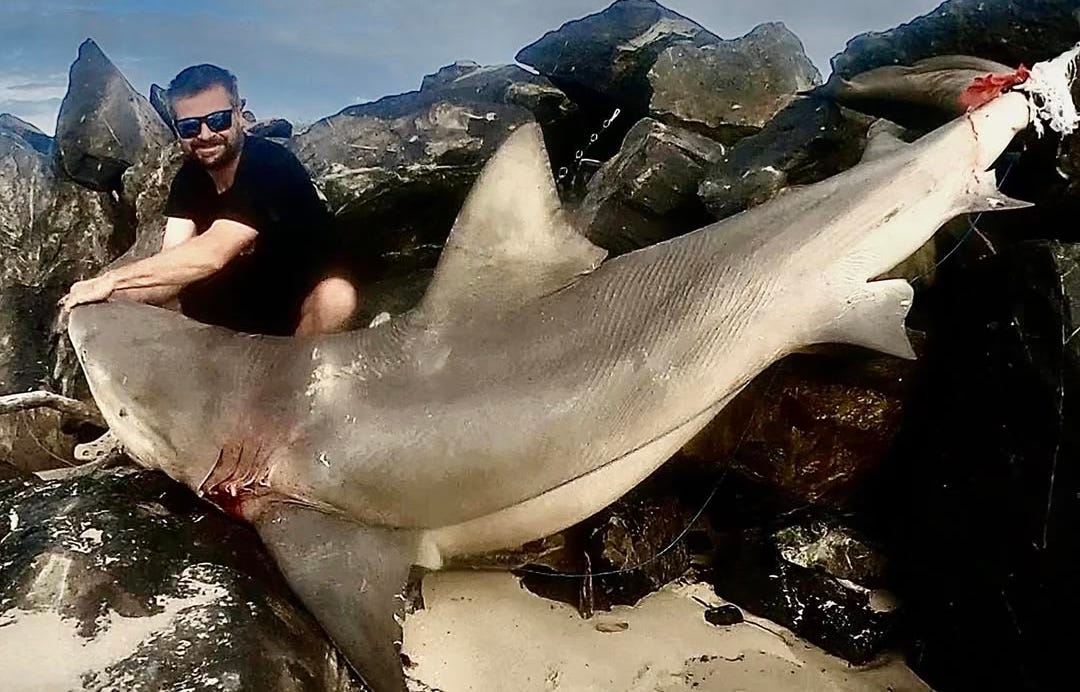
Nancarrow isn’t buying it for a minute. When he started targeting sharks a decade ago he’d be lucky to get five in a season, and even then they weighed only about 80kg. Now he can drop a camera over the side of his boat amid a school of mackerel and immediately ten of the things will start circling, all over 200kg.
His personal record in 2017 was a bull weighing 317kg. “I’ve probably caught six bigger than that just this season,” he says. That includes a 400kg beast in the Clarence River.
“Every year is going to get worse,” he says. “They are going to be bigger and bigger.”
The DPI is determined to present a contrary view. Channel Ten broadcast a segment this week explaining that the DPI had spent months setting 75 hooks per night in Sydney Harbour, and caught only four bull sharks.
“Based on the scientific evidence, it suggests that bull shark numbers are not increasing,” researcher Amy Smoothey told Channel Ten.
Nancarrow saw red. “Just because you are not capable of catching sharks, it doesn’t mean there aren’t any there,” he said within hours of the report being broadcast. He said Smoothey was either lying or revealing that the DPI’s multimillion-dollar shark program is an appalling waste of money. “I hooked five last Thursday within two hours … That’s more than they have caught all season and it cost me $160 in fuel.”
But it’s the great whites that he says present the biggest imminent threat. “White sharks are going to be a massive issue in 10 years time. I’ve seen probably 200 in the last five years. They are still under 200kg. In ten years they are going to be 500kg to 600kg.”
Many methods to mitigate attacks have been devised, trialled and implemented by government agencies and private enterprise over the years. The most expensive, NSW’s tagging program, is useless, Nancarrow says.
In February he noticed that the DPI had been setting lines to catch and tag bull sharks in the Bellingen River, 500km north of Sydney. It was a pointless exercise. The most dangerous bulls, the big females, had already left the river. The only ones they would have tagged at that time were baby males, who would not pose a threat for years.
“This is going to give a false sense of security as next season these sharks will be pinging on the receiver but not attacking,” he said. “They will call the operation a success and ask for more funding, ultimately keeping them in work.”
The tagged sharks won’t attack but the untagged larger ones will. The tragic consequence of all this official deception is that more lives and limbs will be lost while the boffins at the DPI and other agencies keep their jobs.
Nancarrow also decided to take on SharkBanz, a company selling magnets that surfers can slip into a pocket on their legropes, which supposedly triggers an adverse reaction in sharks. He needed money to ensure the test was rigorous, though, so put up a crowdfunding page for it. His loyal followers quickly tossed in $8000, enough for a trip up the coast to find the right conditions.
His conclusion? They work on small sharks, but larger ones were not even mildly perturbed. They came straight at a bait with a SharkBanz attached and swam away with it. (This puts SharkBanz in the same category as the battery-operated Shark Shield, which emits an electromagnetic field; it too was found to be completely ineffective when it was needed most, against a big, hungry shark moving at speed towards prey. Despite comprehensive financial and moral support from politicians and researchers who desperately wanted it to commercially succeed, Shark Shield went broke in 2024.)
“Would I wear one (a SharkBanz) and jump in the water with a bull?” Nancarrow asked in his post announcing the results of the test. “Not a f***ing chance.”
In fact, Nancarrow very rarely jumps in the water at all. “I haven’t swum in salt water in 10 years,” he says.
He says Australia is now beyond the point where a managed cull would solve the problem. “Let the commercial fishermen at them,” he says with typical pragmatism and honesty.
Anybody who wants to make our beaches safer and reintroduce affordable flake to our fish shops would have to agree with him. Anybody who doesn’t is either deluded or has a career to protect.
Dear reader, if you appreciate this piece, please share it as widely as possible, and consider becoming a free or paid subscriber to my Substack page. Your support enables me to produce more content in defence of what’s left of our awesome country and culture.
You can also Buy Me A Coffee here.
If you want to know how Australian beaches became such a safe place for sharks but a dangerous place for humans, watch my documentary, The Heart of Sharkness, here. The callous incompetence of our politicians and various marine experts will shock you.
Performative self congratulatory virtue signalling has become our new national sport. The rush to save the poor cuddly misunderstood sharks is just an example. From climate change gestures, to welcomes to country, to Maugean skates and blue banded bees. What these things have in common is that their efforts, even if they were successful, offer no significant benefit to the environment, and are frequently harmful to society, as in this case. The problem is that almost no one is prepared to call them out, for fear of being attacked by the strident left. This is the genesis of the the rise of One Nation, and sadly I predict none of the mainstream political,or media figures will ever have the courage to call out the fact that we are being fed blatant lies.
The Green religion and the philosophy of depopulation has created a sanctimonious class who might be aligned with a belief in a natural social hierarchy, subordination of individual interests for the perceived interest of the nation or race. Preservation of the predatory sharks, snakes and crocodiles are symbols of the ideology.